
Highlights
Research & collaborations
Our Flagship Research Projects
The foundation creates and supports research about neurodiversity, and boosts the prototyping of innovative solutions.
About Our Research
At the Neurodiversity Foundation, we embrace and celebrate neurodivergent ways of thinking. Our research is grounded in the conviction that neurodiversity is a natural and valuable aspect of human variation—not a disorder, but a difference deserving recognition and empowerment.
We work closely with collaborators from universities, research consortia, students, interns, volunteers, and neurodivergent communities to co-create tools, insights, and environments where all brain types can thrive.
Athens Initiative
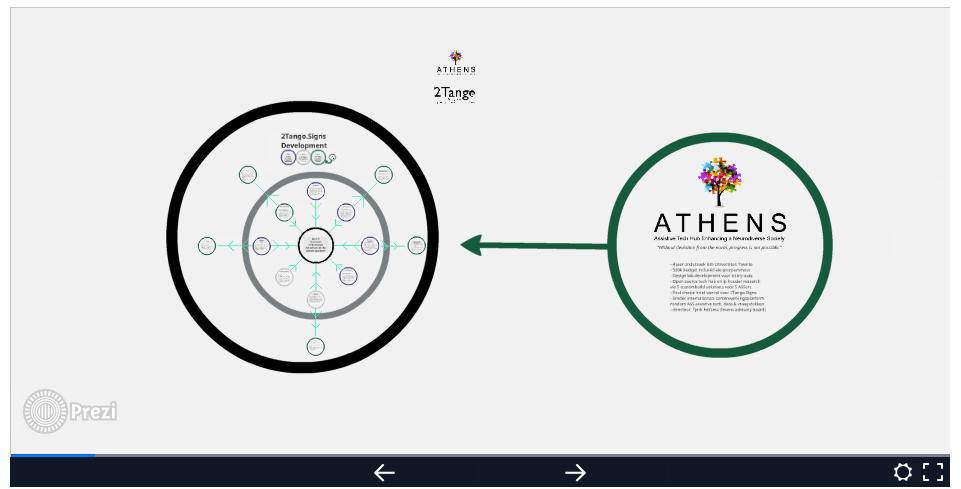
We enacted the plan in three phases. First, we built something that actually worked to solve the problem of neurodiverse translation. We were clear from the start that awareness campaigns, acceptance, and appreciation, while valuable, were not enough to address the real communication barriers autistic people face. Solving the problem meant creating a tangible product that reduced those barriers in everyday interactions.
Our strongest path forward was a scalable technical solution that autistic people across nations could use. To ensure depth and rigor, the research in this first phase remained in English and Dutch. In the second phase, we distributed the system to facilitate conversations among 10,000 Dutch autistic individuals, operating in Dutch and in English translated via Signs.
In the third phase, we scaled the system into a global service designed to provide access to the tools for 10 million neurodivergent people, supporting communication in and across most major languages. As an idealistic initiative built by neurodivergent people for neurodivergent people, and committed to strengthening neurodiverse teams, we aimed to make the service free for autistic individuals who could not contribute financially. Solving the problem meant solving it for everyone, not only for those who could afford it. The goals of the ATHENS Initiative remained non-financial and firmly focused on measurable impact.
Research Fellows
Each year, selected fellows—researchers and students alike—receive mentorship, coaching, and dissemination support, ensuring their neurodiversity-affirming work reaches audiences broadly. The application process for new researchers joining our 2nd cohort of 2025-2026 has been opened from September 1st until 28th 2025. Go to the research fellows program page to apply.
Member of Academic reseach groups
Representatives of the foundation are part of academic research groups and projects, run by universities of the Netherlands. One example is Design Your Life; In partnership with the Universities of Twente and Eindhoven, and a dozen more organisations in the field, this three-year initiative places autistic individuals at the heart of designing assistive technology. The approach is co-creative, inclusive, and community-driven.
Student Led
In 2024–2025, over 50 students initiated projects ranging from political inclusion (e.g., Neuro Inclusive Politician Award) to inclusive sports policies, neurodiversity innovations and workplace neuroinclusion. Projects are collaborative, real-world, and affirming of neurodivergent strengths. To apply for 2025-2026: you can send us an email, use the contact form or message us directly.
Universal sign language
We’re co-creating a simple and inclusive sign language tailored to support neurodivergent individuals and those with communicative differences—driven by the belief that everyone deserves to be understood. The practical research into Signs also focusses on neurodiverse families, and ways to solve communication issues within the family.
Solutions and games
We prototype playful, impactful tools like the What’s Strong With You Game and the Neurodiverse Traits Quartet and ND Pride Gamejam games. These serious games are meant to spark awareness and inclusion in group and workshop settings.




Focus
Four Focus Areas
Programs: Fellowships, Internships, Volunteer Research & Consortia
Our pathways of participation are inclusive and respectful of diverse contributions

Research Fellows Program
Offers structure, publication support, and mentorship in an affirming environment during one year. Apply to enlist.
Research Consortia
Invite us in research consortia focussing on neurodivergence and beyond, on national, european, or worldwide level. Contact us via the contactform.
Internships
Provide hands-on, meaningful project experience. Apply for the role to info@neurodiversiteit.nl
Volunteer Research Contributors
Encourages community involvement in a way that respects neurodivergent perspectives and motivations. Apply for the role to info@neurodiversiteit.nl
Focus
Four Focus Areas
Our aim in research
In the research about neurodiversity, we aim for research efforts that are not (only) researching for the sake of knowledge itself, but have a emphasis on how knowledge can be used to support societal change, or in some way can be used to support the live of neurodivergent people.
We are open to individual researchers, research groups, student groups, research consortia, interns and volunteers. We have experience in all these types. While each research has their own nuances, we generally;

Prefer to have the research report published, for free, and made available to the public, unless decided otherwise.
Prefer research questions, that move beyond the realm of the philosophical, and support practical use of new knowledge in ‘the real world’.
Prefer research that also makes assumptions, suggestions, conclusions or ideas about possible next steps for society, whether its an addendum or the core of the research.
Prefer research that is not strictly medical in nature, at the foundation we have experts, sociologists and other academics, but few ‘medical docters’ who can oversee that type of research.
Prefer research efforts that don’t rely on salaries or the input of limited funds of the foundation towards the researchers to achieve success. All researchers work as a valued & unpaid researcher, intern or volunteer.
In the research about neurodiversity, we aim for research efforts that are not (only) researching for the sake of knowledge itself, but have an emphasis on how knowledge can be used to support societal change, or in some way can be used to support the live of neurodivergent people
Focus
Four Focus Areas
Partnerships & Collaborations
We collaborate with a diverse network of partners
The Hague University of Applied Science
Eindhoven University of Technology
University of Twente
2Tango
Westminster University London
Erasmus University
Leiden university of applied sciences
Media College Rotterdam
All-in Foundation
Erasmus centre of entrepreneurship
Amsterdam centre of entrepreneurship
Omotola Bolarin
Vrije Universiteit
University of Amsterdam
Hanze hogeschool Groningen
Neurodiversity in Business Charity
Focus
Four Focus Areas
10 examples of possible new research
There are many topics to explore. Here are some of them
Identifying Strengths: Examining the neurological basis for specific talents expected among different neurodivergent groups.
Investigating Friction: Exploring how the recruitment process for neurodivergent individuals acts as a barrier in job applications.
Legal Rights of Neurodivergent Individuals: Identifying the rights neurodivergent individuals can assert in the Netherlands and the European Union.
Navigating Obstacles: Investigating which regulations present practical barriers for neurodivergent individuals.
Cooperation Propensity Among Neurodivergent Types: Determining which neurodivergent types demonstrate an above-average inclination towards cooperation.
Co-Occurring Conditions Cocktail: Analyzing how certain strengths are amplified in individuals with co-occurring conditions.
Best Practices in Creating Neurodiversity Networks: Studying successful experiences and practices for establishing neurodiversity networks, providing insights for new initiatives.
Strategies for Neurodiversity Self-Advocacy: Examining different strategies employed by neurodivergent individuals to advocate for themselves.
Assessing Accommodations: Evaluating the benefits of accommodations in various aspects such as energy, time, and financial resources.
Identifying Strengths: Examining the neurological basis for specific talents expected among different neurodivergent groups.
Focus
Four Focus Areas
Core philosophy
At the Neurodiversity Foundation, our research philosophy and efforts are oriented around affirming and empowering neurodivergent individuals, with a focus on practical impact—moving beyond academic theory toward societal transformation. In addition to our existing principles, we now explicitly include the following areas, drawn from our foundation’s stated aims and expertise:

Social Sciences Research
We welcome studies rooted in positively focussed psychological paradigms that frame neurodiversity as a strength rather than a deficit. This includes applying robust scientific theories and models to propose new, inclusive frameworks that elevate neurodiversity in global discourse. Think of it as co-constructing a field that treats neurodivergent experiences with the respect and professionalism they deserve.
Applied Scientific Research
Beyond theory alone, this research emphasizes practical translation—developing tools, strategies, or interventions that respond directly to stakeholder needs. For example, findings might inform accessible tech, inclusive communication methods, or workplace adaptations that neurodivergent individuals find genuinely useful.
Practical Research
This strand focuses on what neurodivergent individuals excel at, how they function best, and their pathways to flourishing. It centers on strengths, individual needs, and capacities—rather than solely studying challenges. It's about amplifying what neurodivergent minds bring to the table.
Pedagogical, Didactic & Educational Projects
Here we target innovation in how we teach and learn. Projects aim to reshape classrooms and educational environments using neurodiversity-centered methods—enhanced curricula, assistive learning tools, or teacher training programs—that make learning accessible and affirming for all neurotypes.
Artistic & Expressive Projects
Led by neurodivergent creatives, these projects use art, media, performance, or visual storytelling to explore and celebrate neurodivergent lives. These works are rooted in research insights and serve both expressive and educational goals, helping shift societal narratives around difference.
AI & Communication Projects
This area powers our “Signs” initiative—harnessing AI and large language models to develop universal, inclusive sign language tools. It explores how digital systems can mediate more accessible communication, supporting neurodivergent participation in daily and community interactions.
Open Access & Public-Impact Research
We favor research that is not only freely available—but also includes guidance on societal uptake. That means publications must be open access and accompanied by concrete proposals for real-world implementation: policy briefs, community toolkits, or action plans to drive inclusive change.
Volunteer-Led, Non-Medical Focus
True to our values, research efforts are unpaid and driven by volunteers—students, researchers, or community members—not supported through foundation salaries. We intentionally avoid medicalized models, favoring social, human-rights-based approaches to neurodiversity. Topics can be very varied and diverse.
Political Research
For certain projects, a research team is needed. This includes 'political' research, where different candidates are 'ranked' according to their own trackrecords. Projects include: Neuroinclusive Politician Award, Political Party Ranking and Neuroinclusive City of the Year award.