
Neurodiversity Foundation
Building a world where every mind belongs.
Ecosystem
Four Focus Areas..
How the Foundation Works
An ecosystem approach to impact.
The Neurodiversity Foundation advances systemic change for neurodivergent people through scalable, dignity-centred projects. We operate through an interconnected set of departments and campaigns, each addressing a different dimension of societal change, but intentionally designed to reinforce one another.
Neurodiversity Pride
Serves as the public and cultural heart of the organisation. Through annual Pride celebrations, global campaigns, and local events, it creates visibility, shared identity, and moments of collective affirmation for neurodivergent people. Pride is not treated as a marketing instrument, but as a form of cultural infrastructure: a recurring public ritual that normalises neurodivergent presence and counters narratives of deficit or shame.
Visit the NDPride website.
Education
Primarily delivered through the Neurodiversity Education Academy, translates values into practice. The Academy develops tools, publications, courses, and community learning spaces that support educators, professionals, parents, and neurodivergent people themselves.
Its work is explicitly strengths-based and dignity-centred, and prioritises accessibility over exclusivity, often choosing open or low-cost distribution models even when resources are constrained.
Visit the Academy website.
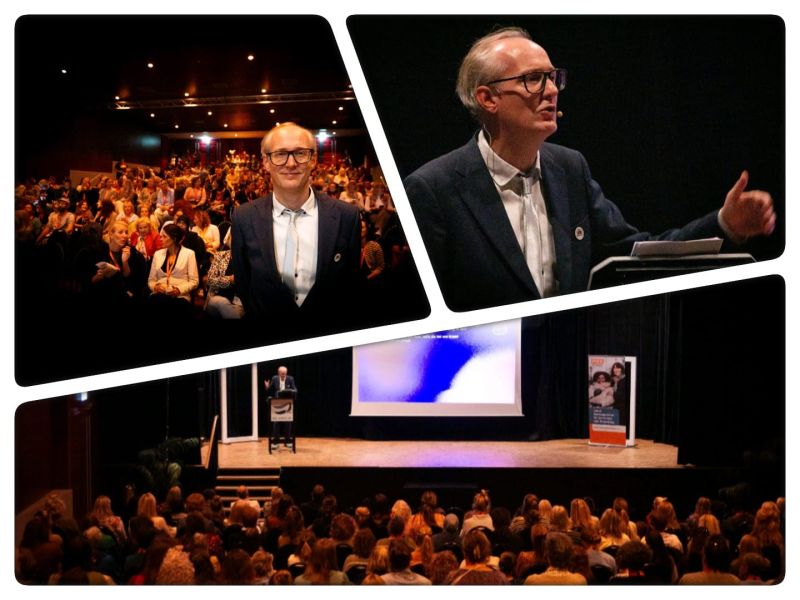
Tjerk Feitsma discussing the value of the neurodiversity model, and how scientific research, lived experience, and sociological perspectives come together to create a broader understanding of human behaviour and development.
Research & Innovation
Research provides evidence, legitimacy, and long-term grounding. The Foundation engages in applied research, collaborates with academic and practice-based partners, and supports neurodivergent researchers through initiatives such as the Research Fellows program.
Research is not pursued for prestige alone, but to inform better tools, policies, and public understanding.
Learn More
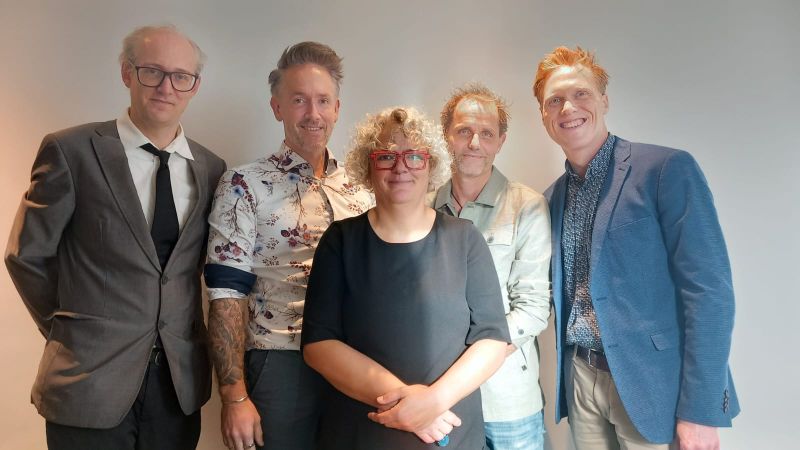
The Participando research consortium recently pitched its proposal to the NWO, focusing on neurodiversity-affirming solutions that help build self-compassion in neurodivergent people. The project was created from lived experience and developed with neurodivergent voices at its core, bringing together partners including the Neurodiversity Foundation, Radboud University, ECIO, and others.
Advocacy
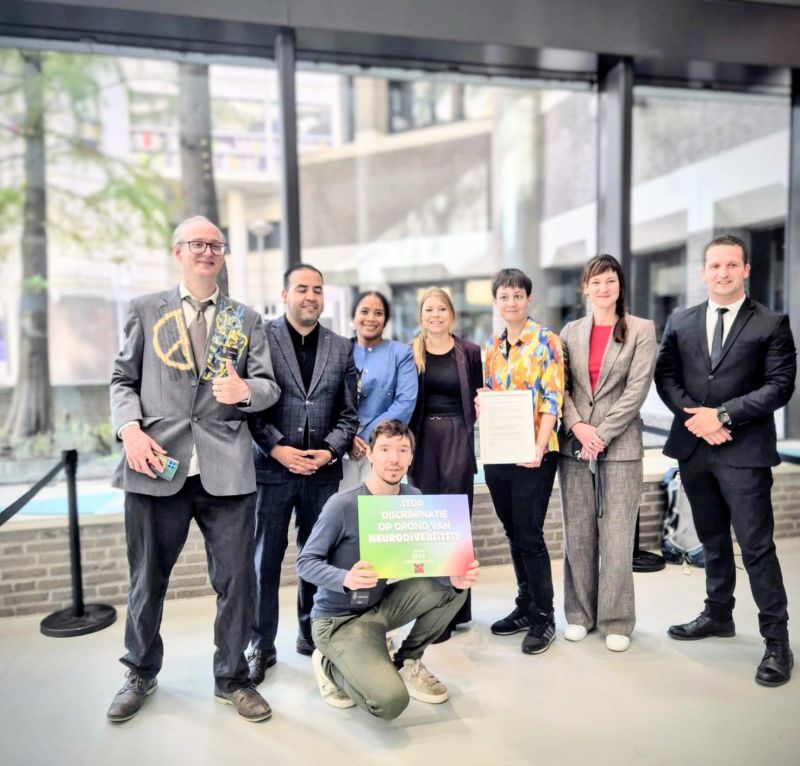
Advocacy connects lived experience, evidence, and public visibility to institutional change.
This includes engagement with policymakers, the development of concrete proposals, the recognition of neuroinclusive political leadership through awards, and the willingness to publicly challenge harmful practices or discriminatory policies.
Learn more
We bring expertise grounded in lived experience, scientific rigour, and deep commitment to dignity.

For Organizations
Training, consultancy, and partnership opportunities to build genuinely neuroinclusive cultures.

For Individuals
Resources, community connection, and programmes that support self-acceptance and growth.

For Researchers
Ethical guidance, collaboration networks, and the Research Fellows Program.
Our Mission
The Neurodiversity Foundation is guided by a clear mission: to fast-forward to a world in which neurodivergent people are recognised, respected, and supported as full participants in society, without being required to erase, minimise, or justify their neurological differences.
Our vision reaches beyond accommodation or inclusion alone. The Foundation works toward a society that actively values neurodivergent ways of thinking, sensing, and relating, not as exceptions to be managed, but as integral contributors to collective intelligence, creativity, and resilience.
In this envisioned future, systems are designed with neurological diversity in mind from the outset, rather than retrofitted after harm has occurred. We aim to achieve our mission using scalable projects to advance systemic changes that supports neurodivergent kind.
Read more about the Foundation
Donate
Help drive progress
Popular Funds
Set up a monthly or annual donation subscription for the department you feel most passionate about.
Simple one time set-up - easy to cancel any time
Neurodiversity Pride
As little as €10/month helps us secure venues, bring in high-calibre keynote speakers, expand support across more countries, and create more resources for the community.
 Donate to ND-Pride
Research & Advocacy
As little as €10/month helps fund research and advocacy that centres lived experience, challenges harmful deficit-based narratives, and protects neurodivergent people through education, policy, and community-led change.
Education & the Future
As little as €10/month helps us create accessible educational resources, support neurodivergent learning, and build a more inclusive future for the next generation.
Questions?
We're here to help
Need Help? We’ve Got You.
If you can’t find what you’re looking for, please get in touch
What is your mission?
The Neurodiversity Foundation is guided by a clear mission: to contribute to a world in which neurodivergent people are recognised, respected, and supported as full participants in society, without being required to erase, minimise, or justify their neurological differences.
Its vision reaches beyond accommodation or inclusion alone. The Foundation works toward a society that actively values neurodivergent ways of thinking, sensing, and relating, not as exceptions to be managed, but as integral contributors to collective intelligence, creativity, and resilience. In this envisioned future, systems are designed with neurological diversity in mind from the outset, rather than retrofitted after harm has occurred.
What is the "Neurodiversity Movement"
The neurodiversity movement is a social movement that aims to promote the acceptance and inclusion of individuals with neurological differences, such as autism, ADHD, and dyslexia. The movement challenges the traditional medical model of viewing such differences as disorders or diseases that need to be cured, and instead views them as useful variations in human neurology.
The neurodiversity movement started in the late 1990s and early 2000s, with the rise of self-advocacy groups and online communities of people with autism and other neurological differences, utilizing the Neurodiversity concept coined by sociologist Judy Singer. These communities began to advocate for greater acceptance and understanding of their experiences, and for more inclusive policies and practices in education, employment, and other areas of life.
The main aims of the neurodiversity movement are to promote acceptance, inclusion, and self-advocacy for individuals with neurological differences, to challenge negative stereotypes and misconceptions about these differences, and to push for more inclusive and responsive policies and practices in various areas of society. It started with great autistic representation, and has grown to encompass advocates from all neurodivergent neurotypes. The Neurodiversity Foundation, aims to improve life for all neurodivergents (sometimes abbreviated to “ND”). And we believe in “bridging the gap” between “ND” and “NT” (abbreviated for “Neurotypical”).
The neurodiversity movement also emphasizes the importance of respecting the autonomy and self-determination of individuals with neurological differences, and of recognizing the unique strengths and contributions they can make to society. The movement is important because it highlights that everyone is unique and should be treated with respect and dignity, and it helps to educate society on the fact that having a neurological difference is not a negative thing but can be a rich source of diversity, creativity and knowledge.
What is "Neurodiversity"?
This information quotes and draws from the works of Judy Singer, who coined the term. Be aware of ChatGPT and other sources: Judy’s definition is the only right one, and can be read here.
Neurodiversity refers to the limitless variety of human minds on the planet, in which no two minds can ever be exactly alike. Diversity is a measurement of the the degree of variability in a specific location.
Neurodiversity is a subset of Biodiversity. Just as Biodiversity refers to ALL the species in a specific location or ecosystem, Neurodiversity refers to ALL Humans (the species Homo Sapiens) in a specific location, the Planet Earth.
Just as Biodiversity was coined for a political purpose, to advocate for the conservation of the environment, Judy Singer intended the term Neurodiversity specifically for an advocacy purpose:
1. Implicitly to suggest a Banner or Umbrella term for an emerging Human Rights Movement based on the pioneering work of the Autistic Self-Advocacy Movement which was being joined by other Neurological Minorities with medically-labelled conditions such as ADHD, the “Dys”abilities and Tourette’s Syndrome.
2. To add Neurodiversity to the intersectional categories of Class, Disability, Ethnicity, Gender, since Disability” was limited inadequately to “Physical Disability, Intellectual Disability” and “Mental Illness”.
Usage:
-
- A synonym for ALL Humanity
- To name the Neurodiversity Movement, a civil rights movement for psycho-medically labelled minorities and their allies
- A category of Intersectionality
Misusage: Does not mean “Neurological Disability/Otherness”
Its for this reason, the Neurodiversity Foundation, has the slogan; “Neurodiversity, means all of us.” It’s a call to discontinue the “othering” of individuals, and include interpreting everyone, as a person of worth, regardless of their unique brain configurations.
The concept of “neurodiversity” used by the “Neurodiversity movement” refers to the idea that neurological differences, such as autism, ADHD, and dyslexia, should be considered variations in human diversity, rather than a disorder or a deficit. This perspective emphasizes the importance of accepting and valuing the unique strengths and abilities of individuals with neurological differences, and providing them with the support and accommodations they need to thrive.
The origings of the concept of neurodiversity has its roots in the disability rights movement, which has long advocated for the rights and inclusion of individuals with disabilities. The idea is that just as society recognizes and values diversity in areas such as race, gender, and sexual orientation, it should also recognize and value diversity in the ways that people think, learn, and communicate.
The word “Neurodiversity” simply names an indisputable fact about our planet, that no two human minds are exactly alike, and uses it to name a paradigm for social change.
One of the key principles of the neurodiversity paradigm is that individuals with neurological differences should be treated with respect and dignity, and not be subject to discrimination or stigmatization. This includes providing accommodations and support that are tailored to the individual’s specific needs, rather than trying to force them to conform to a one-size-fits-all model of a imaginary “normal.” The words “normal” or “natural” should therefore never be in the definition of the word.
Another important aspect of neurodiversity paradigm is the idea that individuals with neurological differences should have a say in the decisions that affect their lives. The phrase “nothing about us, without us”, has become an important call for change, used often by the Neurodiversity Movement, or those underlining the Neurodiversity paradigm. This idea includes involving them in the development of policies and practices that impact their lives, and giving them the opportunity to speak for themselves and advocate for their own rights.
In terms of education, this means recognizing that students with neurological differences have unique strengths and abilities, and that their education should be tailored to their individual needs. This may include providing accommodations such as extra time on tests, or using alternative teaching methods that are more effective for the student. It also means creating an inclusive and supportive classroom environment that values and respects the diversity of all students.
Overall, the concept of neurodiversity promotes the acceptance and inclusion of individuals with neurological differences, and recognizes that diversity in the way we think, learn and communicate is a fundamental aspect of humanity. It is important to understand that everyone is different, and that is okay. The Neurodiversity movement supports the move towards receiving the right support and accommodations for individuals with neurological differences, in order for them to lead fulfilling and successful lives.
Neurodivergent versus Neurodiverse
The terms “neurodiverse” and “neurodivergent” are related, but they have slightly different meanings.
“Neurodiverse” refers to a place, not an individual. “Neurodivergent” is an umbrella term that is used to describe individuals with a wide range of neurological differences, such as autism, ADHD, dyslexia, and other conditions that affect the way a person thinks, learns, and communicates. The term “Neurodiverse” multiple neurotypes, and focusses on the presence of neurological differences within a group or place. Just like Biodiversity, does not relate to a individual animal or tree, but to the fact that in an ecosystem, there is a level of diversity within that system.
As Judy Singer puts it: All humans are neurodiverse, because each one of us has a unique brain, comprised of our genetic heritage (Nature) and cultural and experiential recordings (Nurture). Thus it can be seen that Neurodiversity is simply a catchy name for “Human Nature”. This reminds us that there is an environmental basis for respecting the variability of cognitive differences, both abilities and disabilities.
This has implications for education, and workplaces. If we are going to create Neurodiverse Workplaces, it includes a responsibility to assess such behaviours which are often found in people in leadership positions, to ensure that all are protected from the negative aspects.
The term also emphasizes the idea that neurodivergent conditions are a variation of human diversity, rather than ‘disorders’ or ‘deficits’ as the medical paradigm frames neurodivergent individuals. The word is often used to promote the acceptance and inclusion of individuals with neurological differences, and to recognize and value their unique strengths and abilities, even when its not used in exactly the way the word is defined by. “Neurodiverse” is a word which is often used in the wrong way, by people meaning “neurodivergent”, or another word describing the neurologically distinct. The Neurodiversity Foundation is therefore mild when persons used this term wrong, most people do, but also expects leaders of organizations using these words, to understand what they mean, and not make the confusion worse, by giving credibility to wrong interpretations of the word.
A short explanation could be: A group or place can be neurodiverse, a individual cannnot be neurodiverse. “Neurodiversity” spans all types of humans, both neurodivergent and neurotypical. Or as we say at the Neurodiversity Foundation: “Neurodiversity, means all of us”.
“Neurodivergent” is a more specific term that is often used to describe individuals who have a neurological condition that is considered to be different from the dominant societal norm. The term is often used as an alternative to the traditional medical model, which often views these conditions as disorders or deficits that need to be fixed. It also provides a way for individuals to assert their own identity and autonomy, rather than being defined by medical labels or societal expectations.
All the three terms are important in the neurodiversity paradigm, in promoting acceptance, inclusion and understanding of individuals with neurological differences. In education and workplaces, recognizing and understanding the difference between the terms can help educators and teammembers/laders, to provide the right support, accommodations and inclusive environment for neurodiverse groups and neurodivergent students or employees/teammembers.
Why do you celebrate Neurodivergent Pride?
Many social movements have made a improvement in society, in waves of ’emancipation’. First waves are considered by the Womens Rights movement, the movements boosting equal rights regardless of skincolor, and more recently, the LGTBQ movement supporting equal rights for people with non-heterosexual orientations and non-cisgender identities. The ‘4th wave’ is for Neurodivergents, celebrating that their differences are of value, not something to be eliminated from society.
In a time, where most of us deal often with the negative stereotypes created by others, we have chosen a day as a rebuke, a day to shine our light, and remember that each of us has a lot to be proud of.